
Want to look toned? Think muscle, not just weight loss.
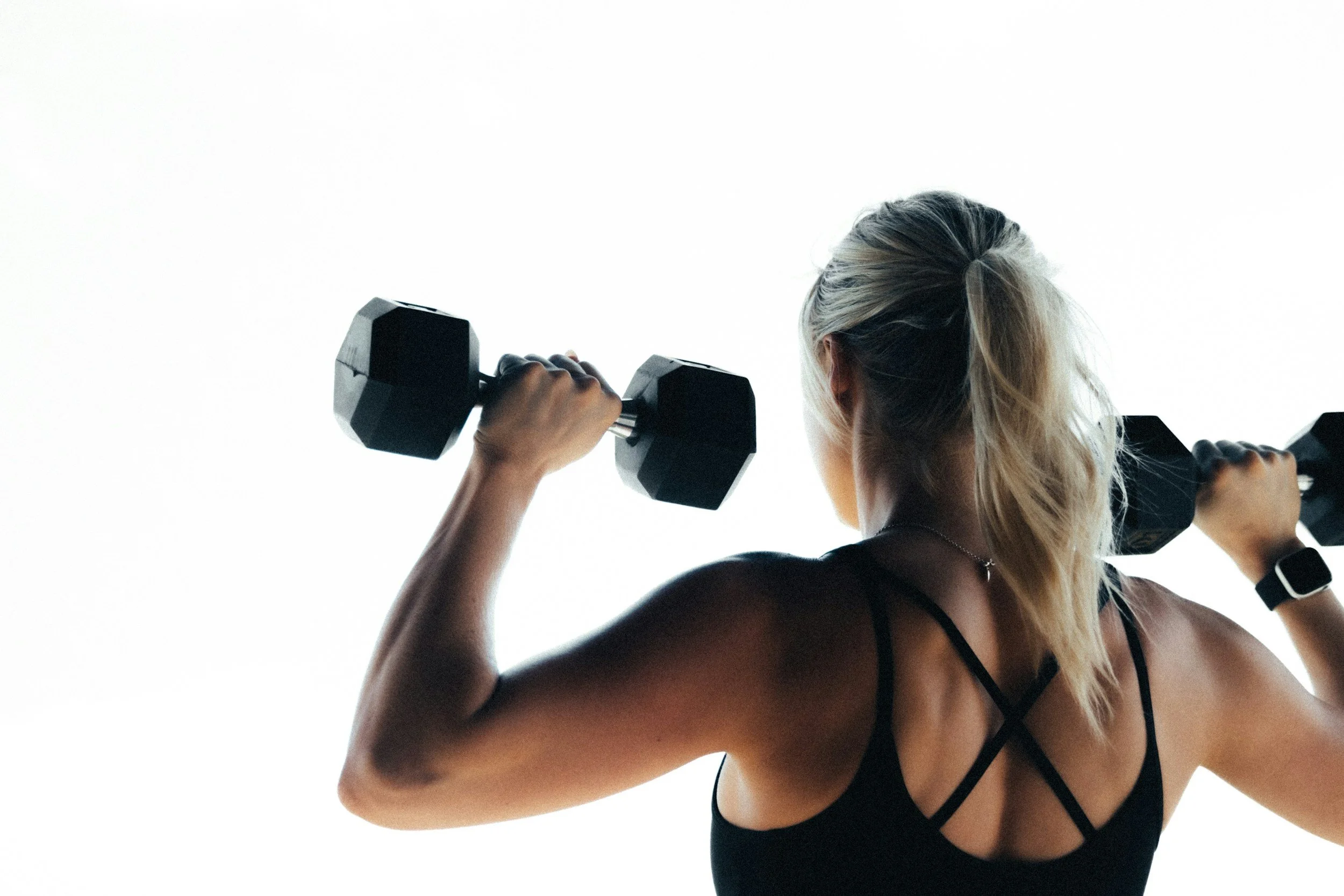
To look leaner, firmer and more defined, we need to exercise in a way that builds and maintains muscle, while eating in a way that supports fat loss if needed.
We can all lose weight. But if that weight loss comes with muscle loss, we can actually make weight management harder in the long term.
Less muscle means less metabolic tissue, less strength and less support for our bones - and it becomes increasingly important to protect what we have as we get older.
So rather than, “How can I lose weight?” a better approach for your health and goals is “How can I maintain or build more muscle while gradually reducing body fat?”
Here are my top 3 tricks:
1. Train to build muscle
If you want to “look more toned”, you need to give your muscles a reason to grow.
The most effective way to do this is progressive overload strength training - gradually increasing the weight, reps, volume or difficulty of your exercises over time.
Different types of exercise give us different benefits. Walking and aerobic exercise are fantastic for cardiovascular health, for example. But if we want to look toned, support bone density and change body composition, we need to be less vague about the type of stimulus we’re giving our body. Our muscles and bones respond to mechanical loading. If we want to maintain or build them, we need to give them a reason to adapt.
Activity alone isn't always enough to preserve the tissues we're trying to protect as we age. Muscle is metabolically active tissue and plays an important role in how our body manages glucose too. Maintaining muscle as we age can therefore support insulin sensitivity, metabolic health, strength and independence. All important factors in reducing our risk of chronic disease.
2. More exercise isn't necessarily better
This is one I think women can find surprisingly difficult to let go of. More cardio, more HIIT, more classes. The harder the better, surely!?
In fact, if you're doing a lot of cardio or high-intensity training while not eating enough protein or overall energy, it can make maintaining or building muscle even harder. Contradicting the whole goal and process. More lean mass burns more energy at rest too FYI so you don’t actually want to compromise muscle loss too much.
If you love your current variety of exercise, then great! But if you really want to move the needle on body composition and strength, there are more specific ways of training and eating that can help dial this in more effectively.
3. Protein matters
If we're trying to lose body fat without compromising muscle, protein becomes particularly important.
For many active women, the higher end of 1.6–2.4 g of protein per kg of body weight per day is a useful target, particularly during a calorie deficit when preserving lean mass is a priority.
Protein also has a higher thermic effect of food, meaning your body uses more energy digesting and processing protein than it does carbohydrate or fat. So two people could technically eat the same number of calories in a day, but the physiological response isn't identical when the composition of those calories is different.
Calories matter - but what those calories are made up is where the magic happens.
4. Fat loss doesn't mean eating as little as possible
If you want to reduce body fat, a calorie deficit will generally be required. But this doesn't mean aggressively restricting food or living on tiny portions.
You can actually eat a lot of food while still being in a calorie deficit, it comes down to what you prioritise.
Building meals around lean protein, vegetables, fruit, legumes and other high-fibre, nutrient-dense foods can give you a lot of food volume for relatively few calories. This helps you feel fuller and makes a small calorie deficit much easier to sustain.
So rather than simply asking, “How can I eat less?”, a better question is: “How can I get the most nutrition, protein and volume from the calories I'm eating?”
A small, sustainable calorie deficit, combined with adequate protein and progressive strength training, is a much more useful approach to changing body composition while maintaining muscle.
Because if you just want to look a bit more toned, then the goal isn't simply to become lighter. It's to become leaner and stronger.
